
Understanding the Whole Child: Noticing Before Judging
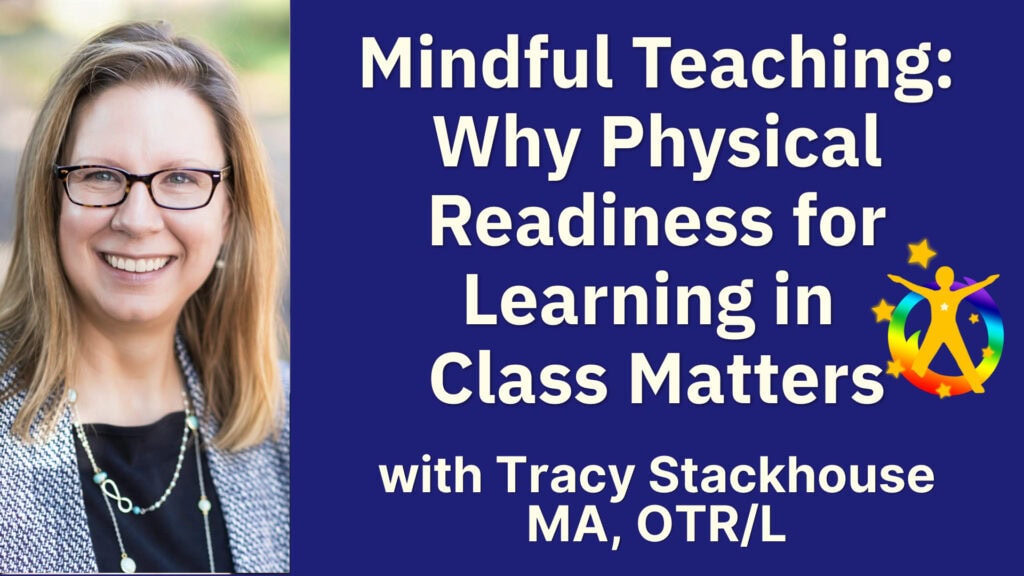
According to Tracy Stackhouse, the foundation of effective support begins with “noticing” – using curiosity rather than control. She encourages teachers and clinicians to observe the “whole child,” from body movements to expressions and participation. Simple acts of noticing – like observing whether a student’s movements lack ease or whether they’re unsettled – can open new avenues for understanding underlying needs.
Stackhouse shares her SpIRiT clinical reasoning model, which starts with making observations – “where are you noticing something?” – even on a drawing of a child’s body. This approach ensures educators and the child tune into what’s truly happening in the child’s body, non-verbally, rather than just responding to behaviors.
Building Readiness Routines in the Classroom
One major takeaway is that struggles seen in one student may often indicate that others in the group might be working harder than expected. Stackhouse suggests structured routines that “bookend” learning activities with body and mind readiness exercises. These can include movement, grounding, and simple sensory activities, helping all students – not just those visibly struggling – become receptive and prepared for learning.
Practical steps for teachers include:
- Adding readiness activities before lessons (e.g., stretching, breathing, wiggling, feeling the “sides” of the body).
- Recognizing that attention begins with orienting the body’s midline, nose, eyes, and ears towards a source of information.
- Allowing movement breaks during circle time, especially if some children can only sit for short periods.
Demystifying Sensory Support and Regulation
Teachers often worry they lack the “body knowledge” to implement these strategies. Stackhouse reassures that support can be simple: it’s about helping children find their ground, learn to receive and send information, and exchange energy in the classroom. She points educators to accessible resources like Lori Desautels’ neuroscience-based curriculum for teachers, which makes these concepts more approachable.
The Role of Sensory Systems in Learning
Vision and hearing are critically important: most classroom learning occurs through these channels. When a child struggles with participation, discomfort often manifests in self-regulating behaviors such as hand licking, chewing, or flapping. Stackhouse urges educators to see these behaviors as cues – the child’s body seeking regulation – rather than problems to suppress.
She also discusses the importance of the vestibular system (located in the inner ear), which is essential for orienting in space, organizing movement, and even supporting eye movements. For children with perceptual or emotional challenges, understanding and supporting these systems is crucial.
Engaged Belonging: Beyond Inclusion
Stackhouse’s concept of “engaged belonging” is a compassionate move beyond mere inclusion (“geography”) to actively foster agency, participation, and meaningful engagement based on each learner’s unique profile. Rather than focusing solely on deficits or labels, educators are encouraged to find ways for every child to connect, belong, and thrive.
Strategies to Try
- Notice and document body clues, not just behaviors.
- Integrate movement and readiness routines into daily schedules.
- Use perceptual play (like tactile feedback, playful movement, or oral motor activities) to support sensory discrimination.
- Seek to understand underlying reasons before choosing intervention – what is the “why” behind a child’s struggle?
- Advocate for vision and hearing screenings and follow-up, since baseline difficulties with these can mask as cognitive or behavioral challenges.
Conclusion
This compassionate, practical conversation between Mina Roustayi and Tracy Stackhouse reminds us that supporting the body-mind signals of neurodiverse learners starts with empathy, observation, and a willingness to see the child beyond their challenges. Small changes – building readiness routines, integrating sensory support, and fostering genuine belonging – can benefit every student, helping classrooms become truly inclusive and empowering for all.
Resources
Resources Tracy provided for this interview:
https://alertprogram.com/
https://www.powerfullyyou.org/
https://ilslearningcorner.com/about-us/ https://www.developmentalfx.org/clinicinthecommunity/dfxconnect
Lori Desautels (books):
https://revelationsineducation.com/the-book/
Connect with Tracy Stackhouse
Tracy Murnan Stackhouse, MA, OTR, (she/her) co-founder and Director of Innovation, served as executive director of Developmental FX until July 2025 and is a leading pediatric occupational therapist (OT) involved in clinical treatment, research, mentoring, and training regarding OT intervention for persons with neurodevelopmental differences, especially Fragile X syndrome and autism. Tracy is known worldwide as a thought-leader, mentor, educator, and podcaster.
Website: https://www.developmentalfx.org/
LinkedIn: https://www.linkedin.com/in/tracy-stackhouse-6a022339